Coming Soon - Brief Overview
Project ONE
[1]
Designing a unified client identity platform for Paramount's $5B ad sales operation ⟶ from blank brief to validated prototype.
Role
AI UX Designer
Skills
Wireframes, End-to-end Product Design, Systems thinking, Prototyping in code.
Tools
Claude, VSCode, Figma, Vercel, Github, Linear, FigJam.

The Problem
[2]
How do you build a single source of truth for client data that's been fragmented across three systems for years?
Paramount's ad sales team manages hundreds of advertisers, agencies, and holding companies with scattered data all over.

Sales reps entered deals against bad data. Ops teams cleaned it up mid-campaign.
My Role
[3]
UX Designer, embedded on the Ad Sales Technology team. I owned the design end to end across three onboarding flows, a governance review system, and a full PRD.
I worked daily with a senior UX/UI designer, PM, and engineers and presented directly to VP and Director-level stakeholders including the VP of SMB Data Solutions, VP of Client Services, and Director of Yield Analytics.
The Challenge
[4]
Five systems. Zero consistency. Two users who needed completely different things from the same product.
The entity hierarchy:
HoldCo
→
Agency
→
advertiser
→
brand
had different rules at every level, touching five systems: Salesforce, WideOrbit, Phoenix, Freewheel, and BigQuery.
And the product had to serve two users with completely different goals. A sales rep who wants zero friction. A governance user who needs full context before approving anything.



Design Strategy
[7]
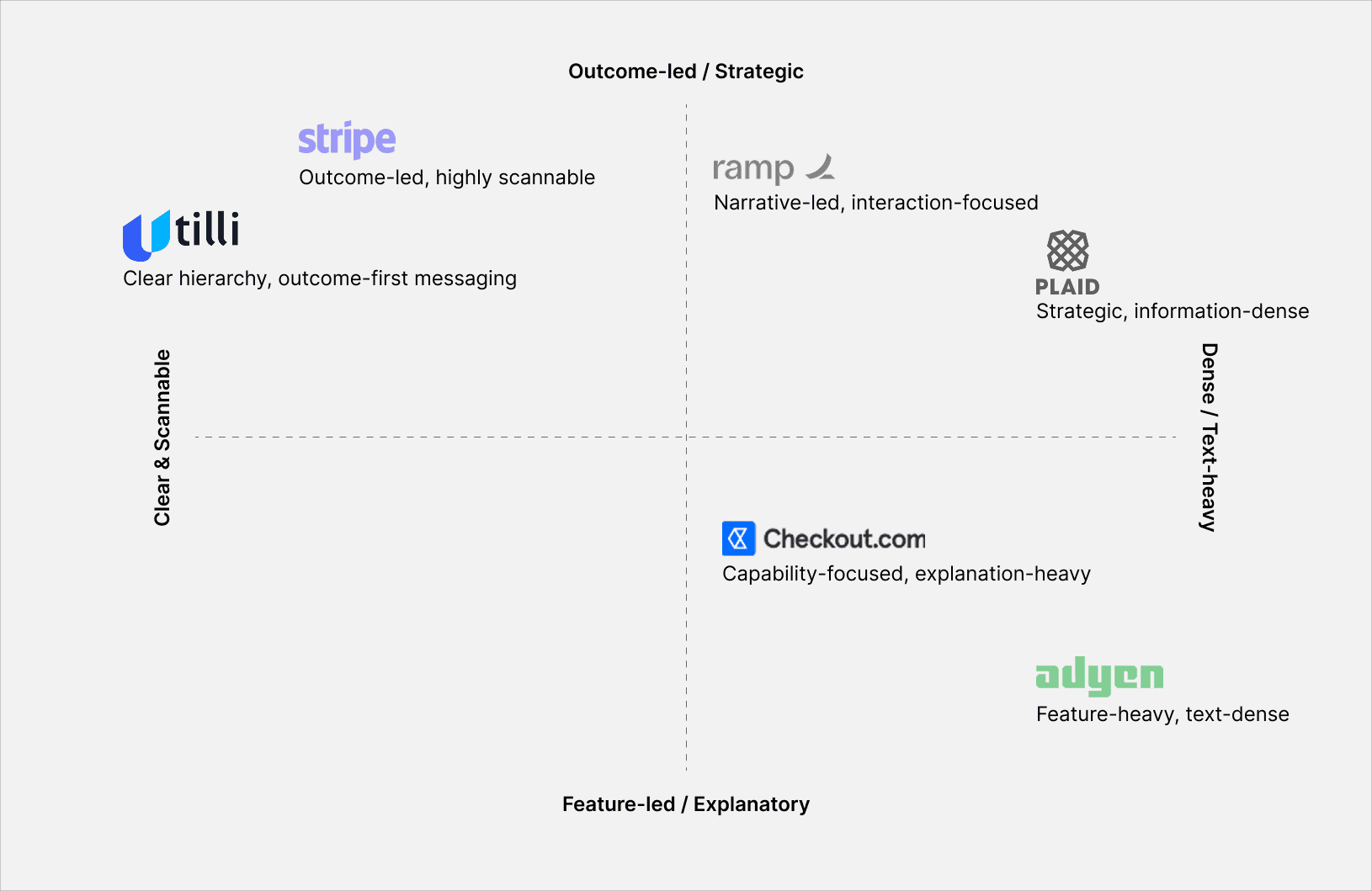
One clear story: what Tilli does, who it serves, and why it matters.
Two paths
Option 1
Improve the existing pages with clearer copy and updated visuals.
vs
Option 2
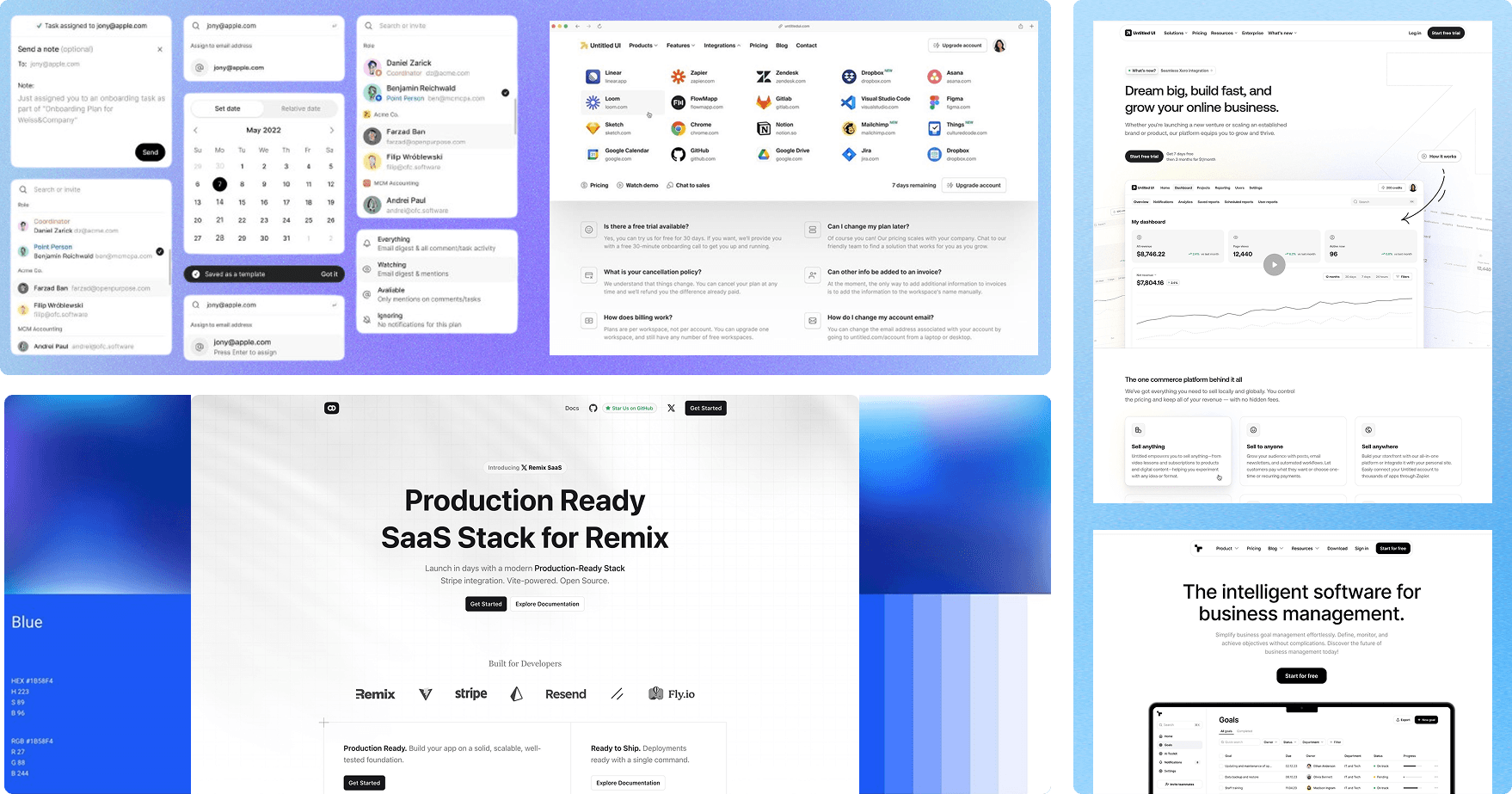
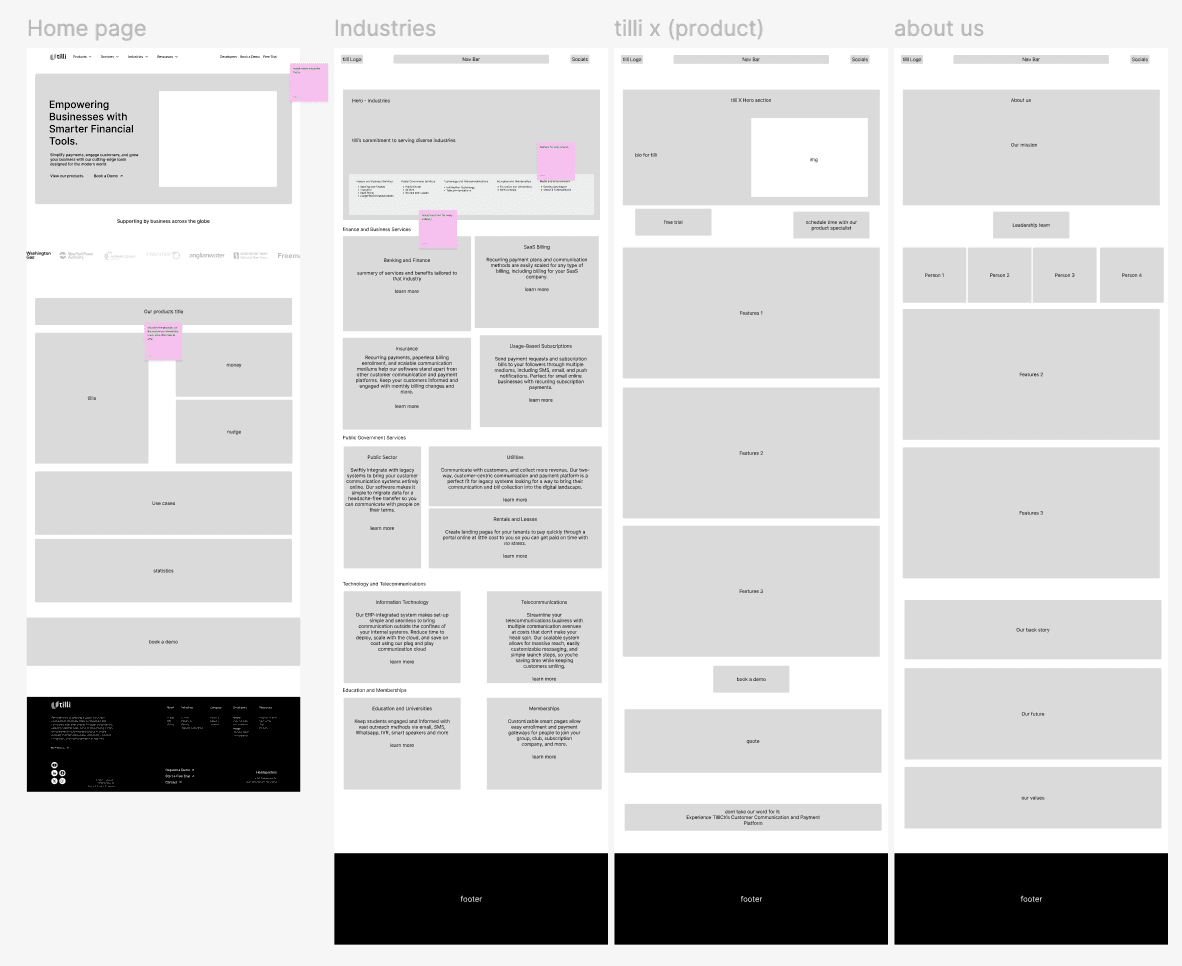
Rebuild the site around a single, clear narrative with reusable sections.
Chose Option 2: solving both user confusion and long-term scale.
Key features
1
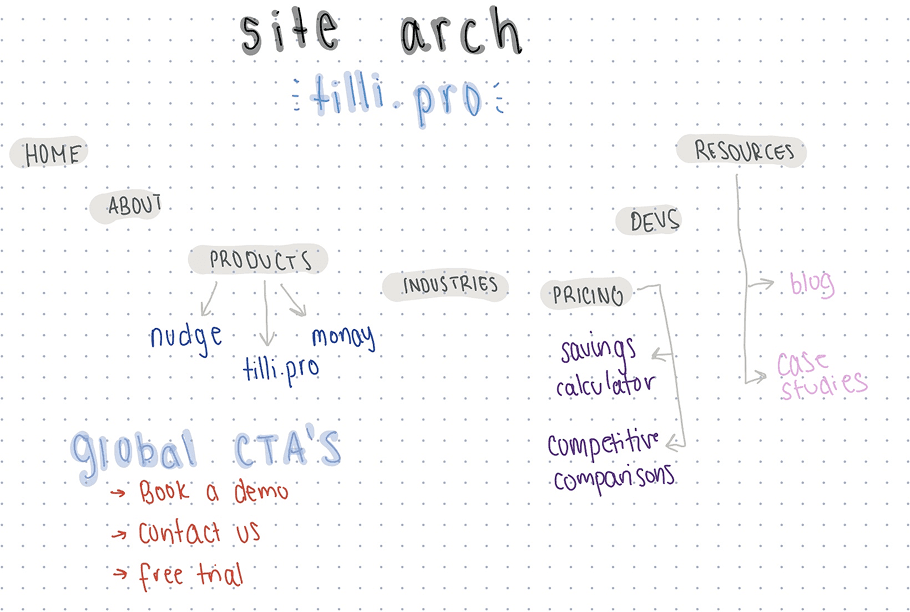
Platform-first framing → Every page defines the value clearly.
2
Outcome-led navigation → User goals > internal product names.
3
Modular sections → Reusable sections for scale + consistency.
Solution
[8]
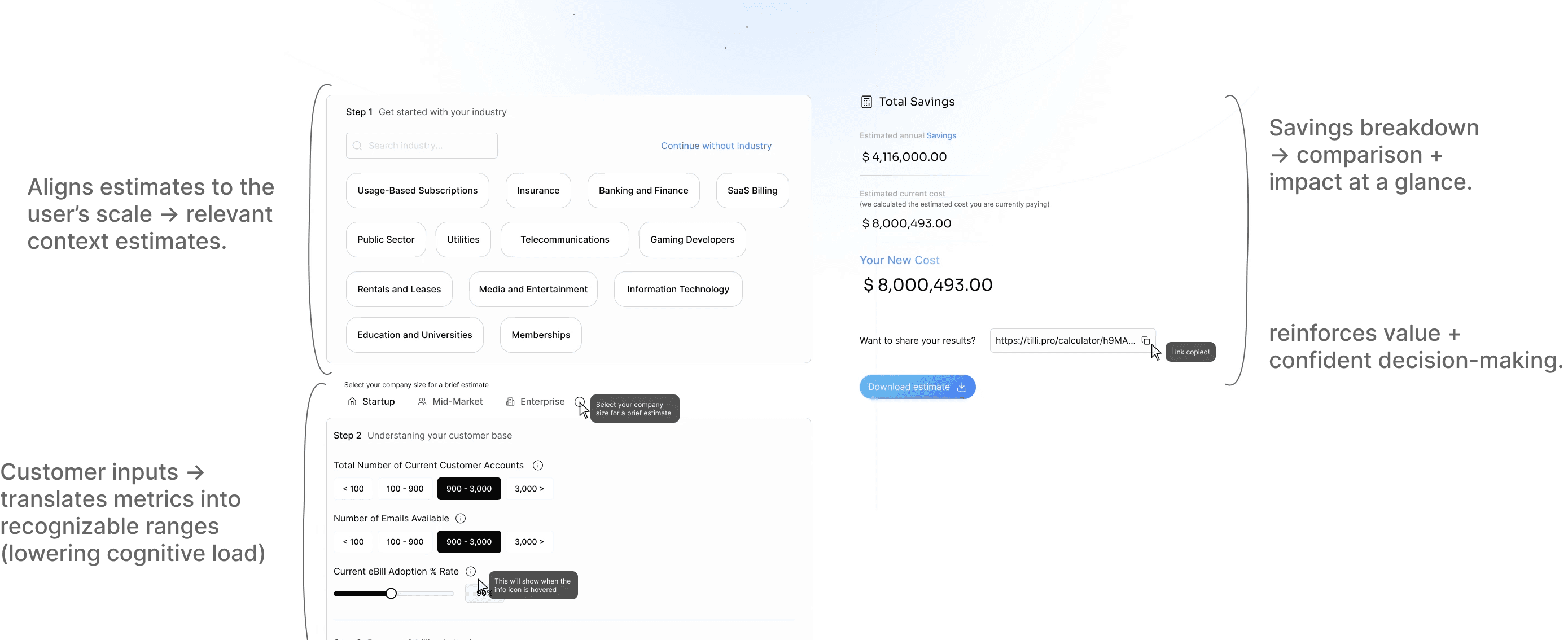
#1: Show measurable impact to their enterprise before sales.
Enterprise buyers needed proof.
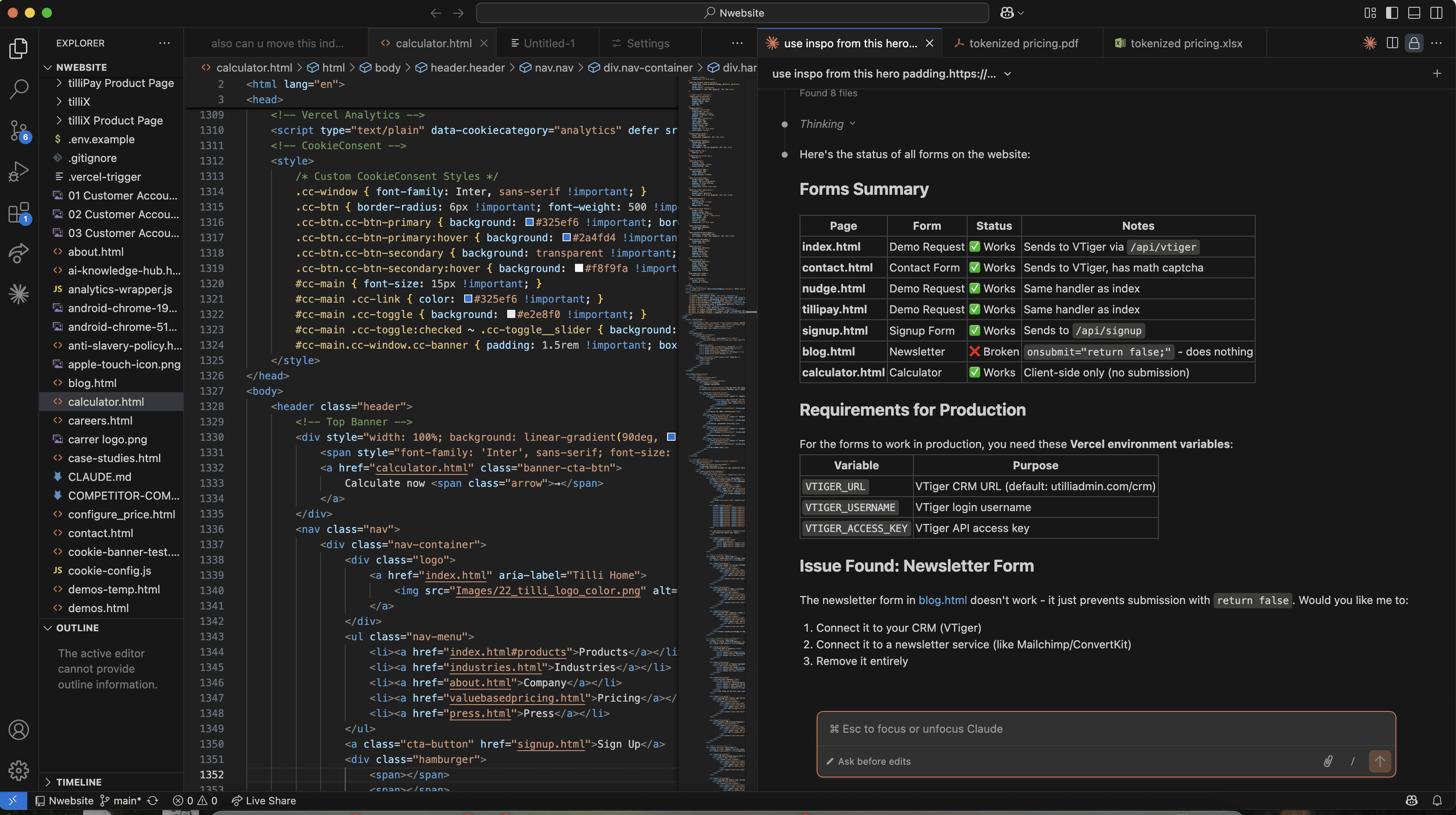
So I designed an interactive savings calculator, inspired by SaaS estimators, so users could self-validate ROI.
#2 Site overlooked developers evaluating integrations and APIs. .
I designed structured, utility-first developer pages to speed up comprehension and decision-making.
Structured, utility-driven dev pages.
→ Clear API framing
→ Faster comprehension
Helping developers quickly answer: can this work for us?
#3 Messaging didn’t build trust.
Generic copy obscured product value, so I rewrote it to clearly define purpose and relevance.
#4 Users couldn’t form a clear mental model of the platform.
I restructured the IA around platform logic to clarify relationships and reduce cognitive load.
Final Designs
[9]
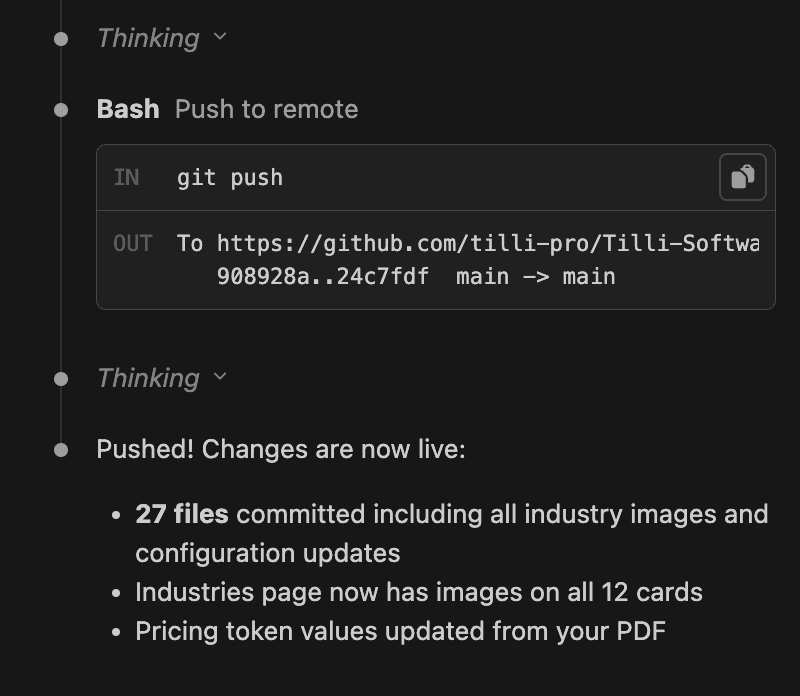
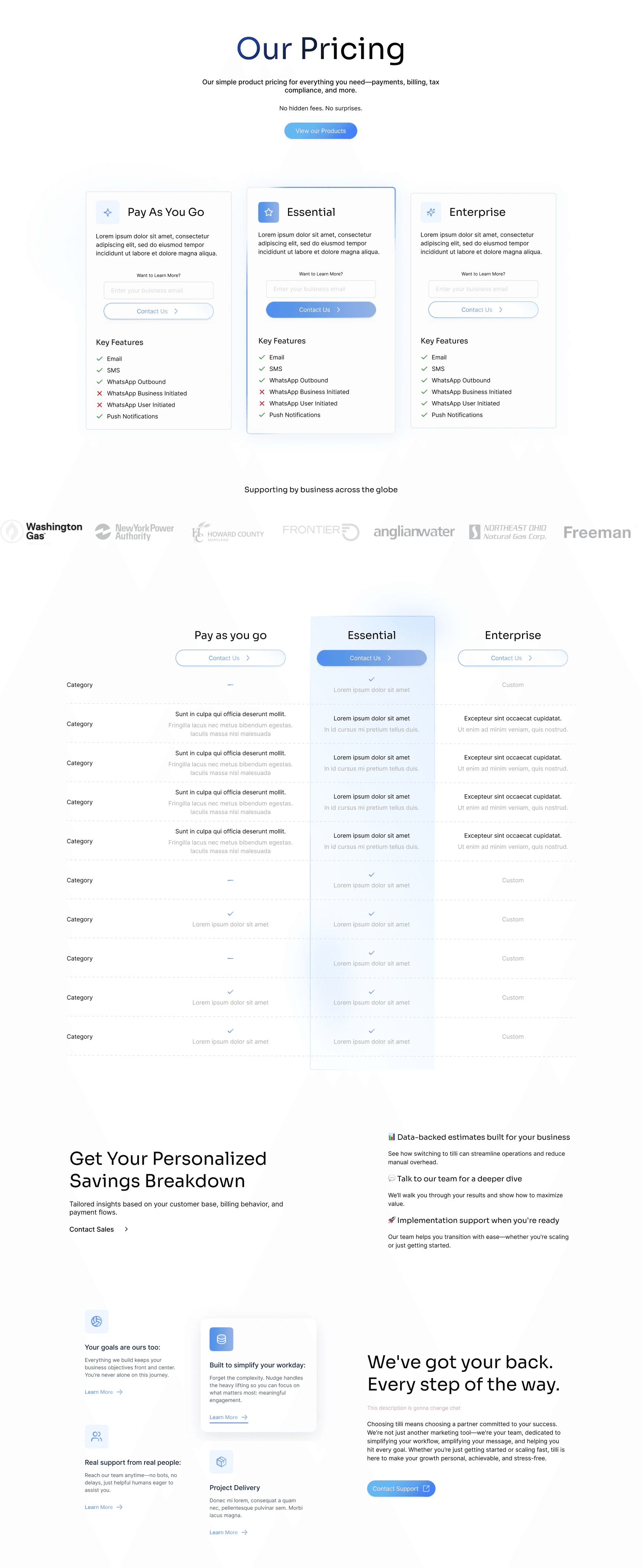
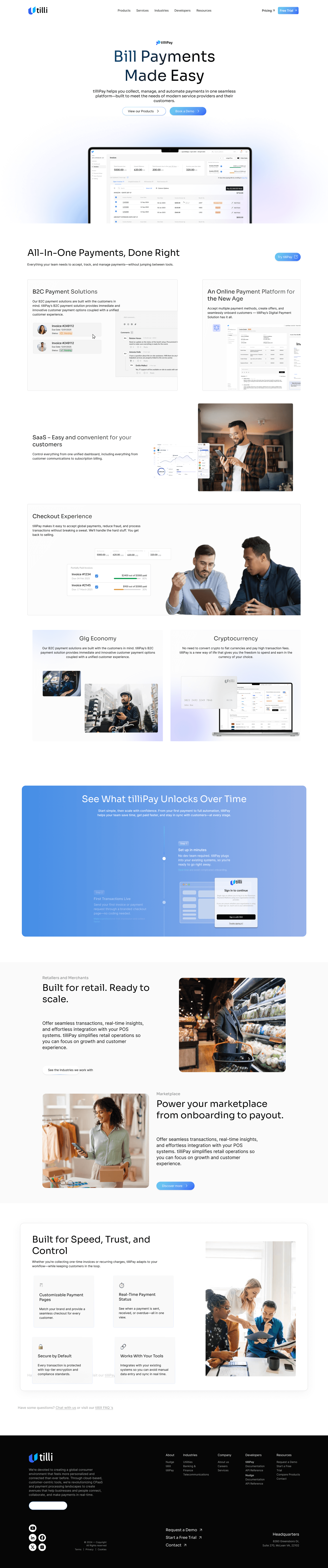
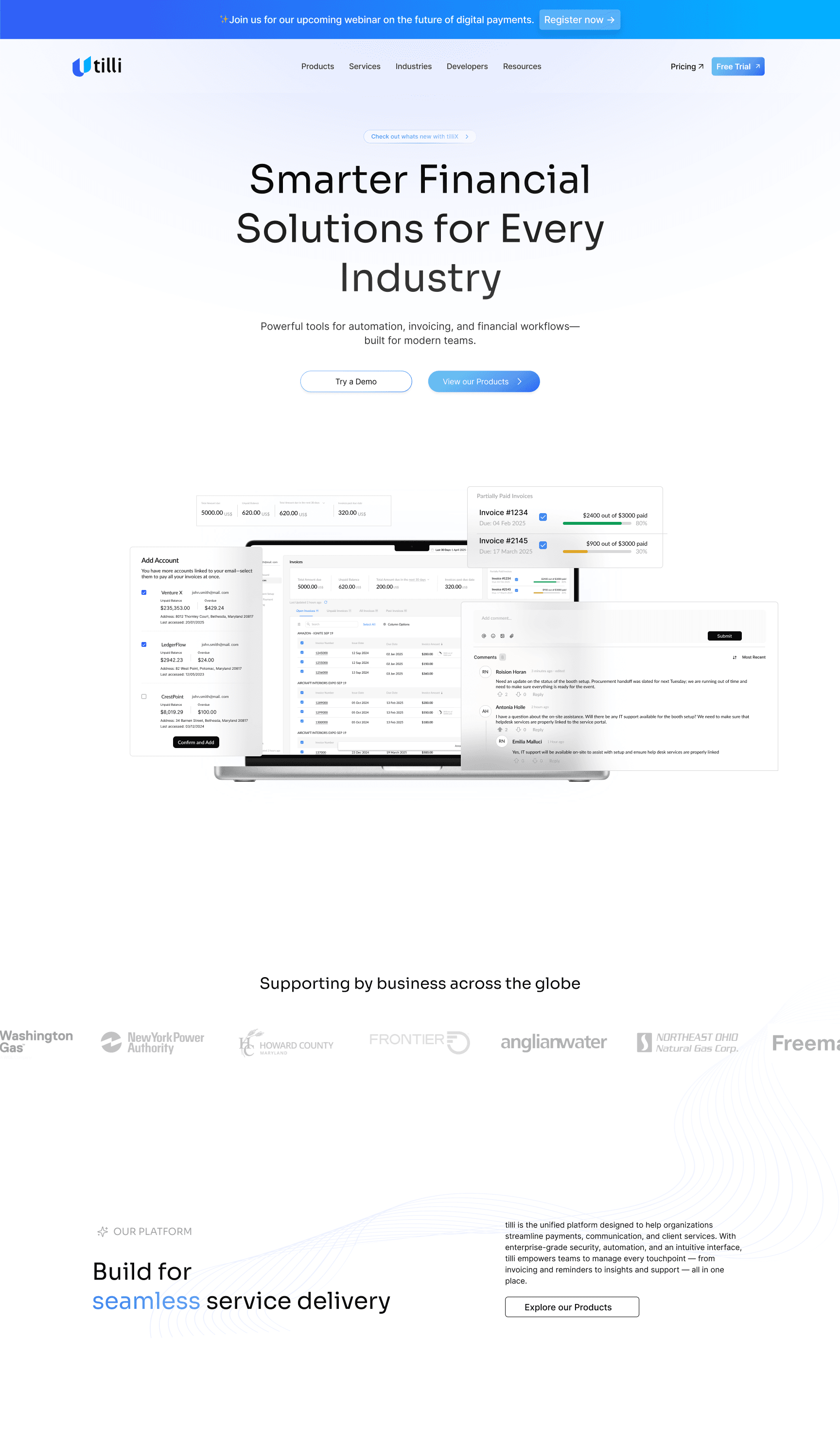
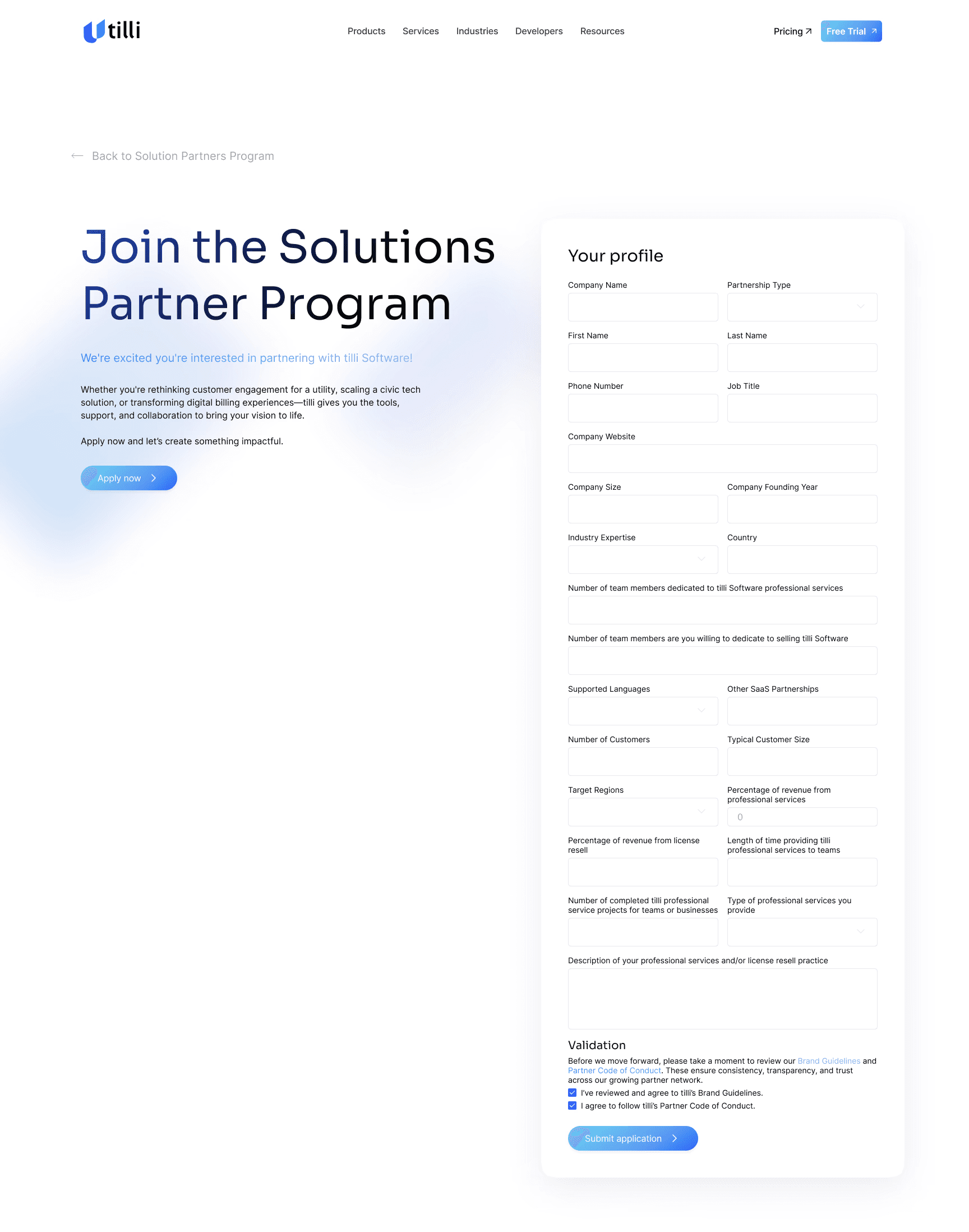
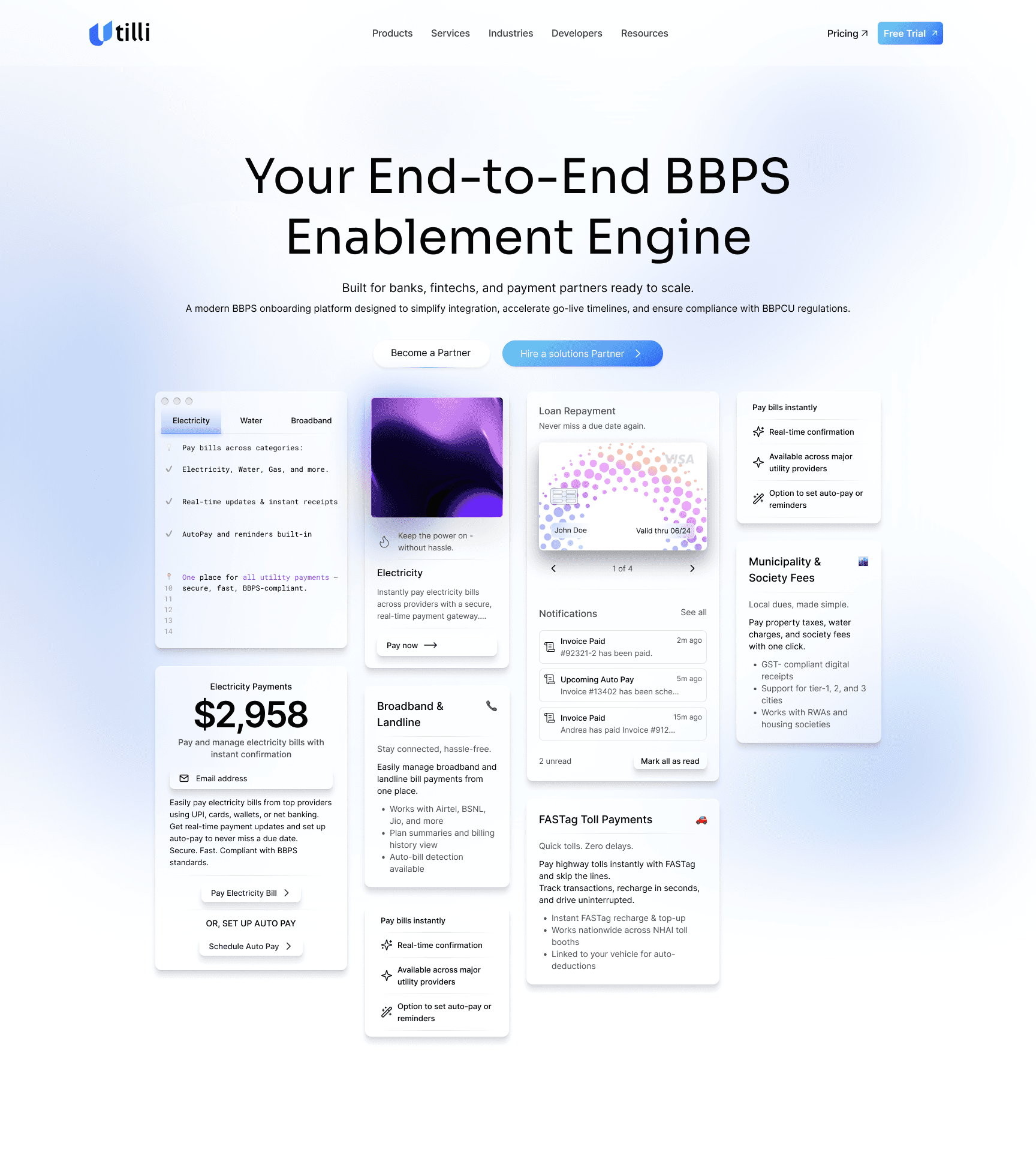
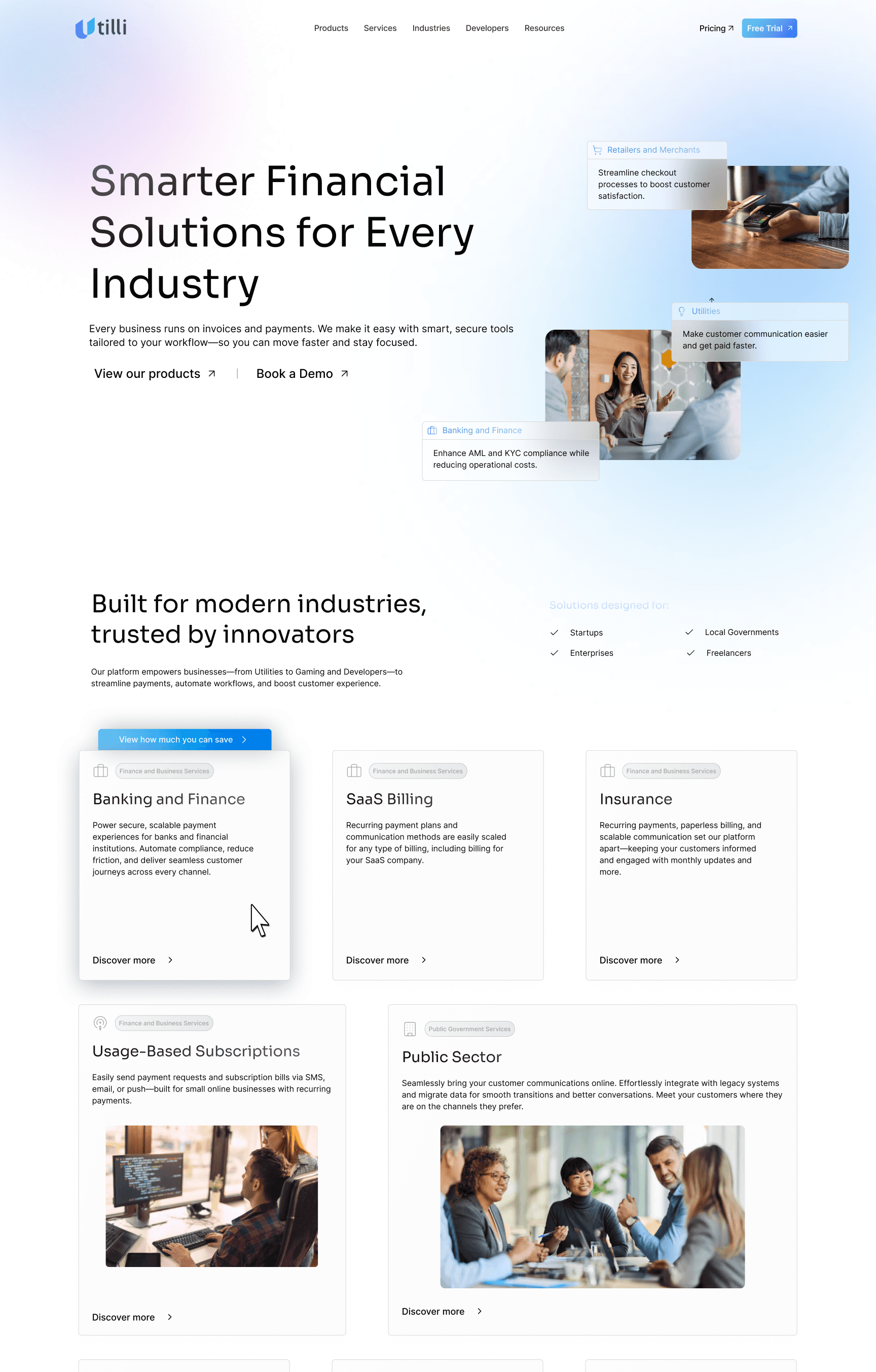
The redesigned tilli.pro website presents Tilli as a cohesive, enterprise-ready platform rather than a collection of disconnected products.
Each product has its own structured page, with clear sections that help users understand purpose, audience, and value based on their intent.
Lessons Learned
[10]
Designing this as a solo designer had me constantly switching my focus between strategy, structure, visuals, and execution. I had alot of mental blocks when deciding what not to design and what to focus on, and often I thought if I had another designer perhaps the answer would be more clear.
Instead a swe on my team told me to use those mental blocks to slow down and pressure-test decisions: Is this clear? Is this necessary? Does this help someone move forward?
Over time, I learned that clarity doesn’t come from adding more but it comes from removing friction and committing to a direction.
This project helped me understand the value of thinking in systems, not just the visual screens. Once the foundation and structure of what I wanted to implement visually was right, decisions felt lighter, and the design became easier to scale and explain.
Footer
[11]